
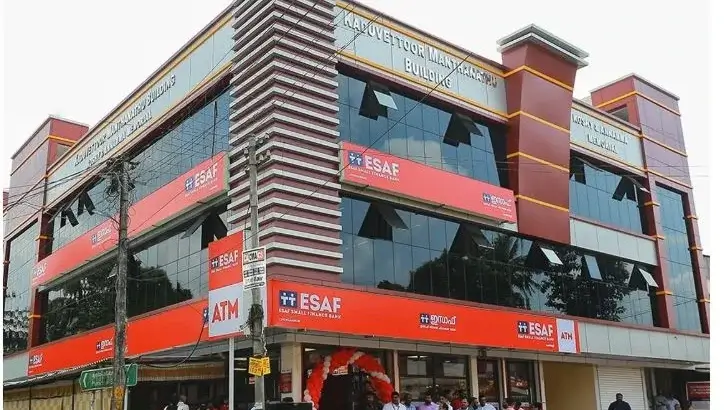
ESAF Small Finance Bank Ltd – Complete Guide
1. Introduction to ESAF Small Finance Bank
ESAF Small Finance Bank Ltd is one of India’s fastest-growing small finance banks, established with a strong focus on financial inclusion and rural empowerment. The bank originated from ESAF Microfinance, which worked extensively with underserved communities before transitioning into a licensed small finance bank. The core idea behind ESAF is simple yet powerful—bring formal banking services to people who have traditionally been excluded from mainstream financial systems.
Unlike conventional commercial banks that prioritize urban and corporate customers, ESAF has built its identity around rural households, small entrepreneurs, and low-income groups. This focus has helped it create a unique niche in the Indian banking ecosystem. Over time, the bank has expanded its footprint while still maintaining its social mission, which is deeply embedded in its operations.
The bank operates under the regulatory framework of the Reserve Bank of India (RBI), ensuring compliance, transparency, and stability. It offers a wide range of banking products, including deposits, loans, insurance, and digital services. ESAF’s transformation from a microfinance institution to a full-fledged bank marks a significant milestone in India’s financial inclusion journey.
2. Mission and Vision of ESAF Bank
2.1 Mission Statement
The mission of ESAF Small Finance Bank revolves around empowering underserved communities through accessible financial services. The bank aims to provide affordable banking solutions that improve livelihoods and encourage self-sustainability. It focuses on bridging the gap between rural populations and formal financial systems.
At its core, ESAF’s mission is not just profit-driven but socially driven. It emphasizes ethical banking practices, community development, and inclusive growth. The bank also works towards enhancing financial literacy, ensuring customers make informed financial decisions.
2.2 Vision Statement
The vision of ESAF Bank is to become a leading small finance bank that transforms lives through responsible banking. It seeks to create a financially inclusive society where every individual has access to reliable banking services.
The vision also includes leveraging technology to enhance customer experience while maintaining its grassroots connection. ESAF aims to balance modernization with social responsibility, making it a unique player in India’s banking landscape.
3. History and Evolution of ESAF Bank
ESAF began its journey in 1992 as ESAF Society, focusing on social development activities. Over time, it entered microfinance operations, helping rural women and small entrepreneurs access credit. This grassroots experience became the foundation of its banking philosophy.
In 2017, ESAF Microfinance received a license from the RBI to operate as a Small Finance Bank. This transformation allowed it to expand services beyond lending into full-scale banking operations. Since then, ESAF has steadily grown its customer base, branch network, and financial portfolio.
The evolution of ESAF reflects India’s broader financial inclusion story, where microfinance institutions are transitioning into formal banking entities to serve wider audiences.
4. Head Office and Corporate Details
The head office of ESAF Small Finance Bank is located in Thrissur, Kerala, India. Thrissur is known as the cultural capital of Kerala and serves as a strategic base for the bank’s operations.
From its headquarters, ESAF manages nationwide operations, including branch expansion, digital banking strategies, and regulatory compliance. The corporate office also plays a key role in product development and financial planning.
The choice of Thrissur reflects ESAF’s strong roots in Kerala, where it first began its community-focused financial services. Despite expanding across India, the bank maintains its strong southern India base.
5. Leadership: CEO and Management Team
ESAF Bank has been guided by experienced leaders who bring expertise in banking, microfinance, and rural development.
The most prominent CEO in ESAF’s history is K. Paul Thomas, who played a crucial role in transforming ESAF from a microfinance institution into a licensed bank. His leadership emphasized ethical banking and financial inclusion.
5.1 List of Key CEOs (Historical Overview)
- K. Paul Thomas – Founding CEO and key architect of transformation
- Successive executive leadership teams (post-bank licensing phase)
- Interim management committees during transition phases
While ESAF has had a stable leadership structure, detailed public records of all CEOs in chronological order are limited due to its evolution from a society to a bank.
The management team includes experts in risk management, retail banking, digital transformation, and rural finance.
6. Products and Services Overview
ESAF Small Finance Bank offers a wide range of products tailored for both rural and urban customers. These include savings accounts, fixed deposits, recurring deposits, personal loans, MSME loans, agricultural loans, and insurance products.
The bank also provides digital banking services such as mobile banking apps, internet banking, and UPI-based transactions. These services are designed to simplify banking and increase accessibility.
One of ESAF’s strengths lies in customizing financial products for low-income groups, ensuring affordability and ease of access.
7. Deposit Products of ESAF Bank
Deposit products are a core part of ESAF’s banking operations. These include:
- Savings Accounts
- Current Accounts
- Fixed Deposits (FDs)
- Recurring Deposits (RDs)
Savings accounts often come with zero-balance options for rural customers. Fixed deposits offer competitive interest rates, making them attractive for long-term savings.
Recurring deposits are particularly popular among low-income groups who prefer small monthly savings.
8. Loan Products Offered
ESAF provides a variety of loan products:
- Microfinance loans
- MSME loans
- Agricultural loans
- Personal loans
- Housing loans
Microfinance remains ESAF’s strongest segment, empowering women entrepreneurs and small businesses.
Agricultural loans support farmers with seasonal credit needs, while MSME loans help small businesses expand operations.
9. Digital Banking and Fintech Services
ESAF has invested heavily in digital transformation. Its mobile banking app allows users to perform transactions, check balances, and manage accounts easily.
The bank also supports UPI payments, IMPS, NEFT, and RTGS transfers.
Digital kiosks in rural branches help bridge the technology gap for first-time users.
10. Profit and Loss Analysis
ESAF Bank has shown steady financial growth since becoming a small finance bank. Revenue is primarily generated from interest income on loans.
However, like many small finance banks, ESAF faces challenges in maintaining low non-performing assets (NPAs).
Profitability has improved over time due to diversification of loan portfolios and expansion of retail banking services.
11. Annual Report Insights
ESAF’s annual reports highlight key financial metrics such as:
- Growth in loan portfolio
- Deposit expansion
- Capital adequacy ratio
- Net interest margin
The reports also emphasize ESG initiatives and financial inclusion achievements.
12. Branch Network Across India
ESAF Bank operates hundreds of branches across India, with strong presence in:
- Kerala
- Tamil Nadu
- Karnataka
- Maharashtra
- Madhya Pradesh
The bank continues expanding into northern and eastern India to increase accessibility.
13. ATM Network and Accessibility
ESAF has a growing ATM network, supported by partnerships with other banks and ATM networks.
Customers can access services through shared banking networks, increasing convenience even in remote areas.
14. Financial Inclusion Model
ESAF’s model focuses on:
- Rural banking outreach
- Women empowerment
- Microcredit access
- Financial literacy programs
This model is central to its identity as a small finance bank.
15. Customer Segments and Target Market
ESAF primarily serves:
- Rural households
- Small businesses
- Farmers
- Women self-help groups
- Low-income urban workers
16. Risk Management and Compliance
The bank follows strict RBI guidelines, including:
- Credit risk assessment
- Operational risk controls
- Fraud detection systems
17. ESG and Social Impact
ESAF is strongly committed to ESG principles:
- Environmental sustainability programs
- Social empowerment initiatives
- Ethical governance practices
18. Competitive Position in Banking Sector
ESAF competes with other small finance banks like AU Bank, Ujjivan, and Equitas.
Its strength lies in its rural penetration and microfinance expertise.
19. Challenges and Future Growth Strategy
Challenges include:
- Rising NPAs in rural lending
- Digital competition
- Expansion costs
Future strategy focuses on digital banking, urban expansion, and SME lending.
20. MCQs on ESAF Small Finance Bank
1. ESAF Bank originated as:
A. Commercial Bank
B. Microfinance Institution
C. Cooperative Bank
D. NBFC
Answer: B
2. Head office of ESAF Bank is located in:
A. Mumbai
B. Kochi
C. Thrissur
D. Chennai
Answer: C
3. ESAF became a small finance bank in:
A. 2015
B. 2017
C. 2019
D. 2020
Answer: B
4. Primary focus of ESAF is:
A. Corporate lending
B. Financial inclusion
C. Stock trading
D. Insurance only
Answer: B
5. ESAF primarily serves:
A. Large corporates
B. Rural and low-income groups
C. Only government
D. Foreign investors
Answer: B
6. ESAF Bank’s primary lending focus is:
A. Corporate mergers
B. Microfinance and retail lending
C. Stock brokerage
D. Foreign exchange trading
Answer: B
Explanation: ESAF primarily focuses on microfinance and retail lending, especially for rural households and small entrepreneurs.
7. ESAF Bank is regulated by:
A. SEBI
B. RBI
C. IRDAI
D. NABARD only
Answer: B
Explanation: Like all banks in India, ESAF operates under the regulatory supervision of the Reserve Bank of India (RBI).
8. ESAF Bank’s core strength lies in:
A. Investment banking
B. Rural financial inclusion
C. Cryptocurrency trading
D. Wealth management for HNIs
Answer: B
Explanation: ESAF has built its identity around financial inclusion, especially in rural and semi-urban areas.
9. ESAF Bank initially started as:
A. Private bank
B. Cooperative society
C. Microfinance institution
D. Foreign bank branch
Answer: C
Explanation: ESAF began as a microfinance institution under ESAF Society.
10. ESAF Bank offers which of the following digital services?
A. UPI payments
B. Mobile banking
C. Internet banking
D. All of the above
Answer: D
Explanation: ESAF provides full digital banking services including UPI, mobile apps, and internet banking.
11. ESAF Bank’s loans are mainly targeted toward:
A. Large corporations
B. Rural entrepreneurs and MSMEs
C. Government institutions
D. International firms
Answer: B
Explanation: MSMEs and rural entrepreneurs are the primary borrowers.
12. ESAF Bank’s headquarters is located in:
A. Kochi
B. Thrissur
C. Bengaluru
D. Chennai
Answer: B
Explanation: The corporate headquarters is in Thrissur, Kerala.
13. ESAF Bank became a Small Finance Bank in:
A. 2015
B. 2016
C. 2017
D. 2018
Answer: C
Explanation: RBI granted ESAF SFB license in 2017.
14. ESAF Bank promotes which type of financial model?
A. Luxury banking
B. Inclusion-based banking
C. Speculative banking
D. Crypto banking
Answer: B
Explanation: ESAF focuses on inclusive banking for underserved communities.
15. Which is a key deposit product of ESAF Bank?
A. Mutual funds
B. Fixed Deposits
C. Equity shares
D. Derivatives
Answer: B
Explanation: Fixed Deposits are a major savings product offering stable returns.
16. ESAF Bank mainly operates in:
A. Only metro cities
B. Rural and semi-urban India
C. Foreign countries
D. Offshore markets
Answer: B
Explanation: ESAF focuses heavily on rural and semi-urban expansion.
17. ESAF Bank’s microfinance loans are mainly given to:
A. Large industries
B. Women self-help groups
C. IT companies
D. Export firms
Answer: B
Explanation: Women SHGs are a major beneficiary group.
18. ESAF Bank’s growth strategy includes:
A. Closing rural branches
B. Digital expansion and SME lending
C. Reducing loan portfolio
D. Exit from microfinance
Answer: B
Explanation: The bank is focusing on digital transformation and SME expansion.
19. ESAF Bank is best described as:
A. Investment bank
B. Universal bank
C. Small Finance Bank
D. Central bank
Answer: C
Explanation: ESAF is officially categorized as a Small Finance Bank.
20. ESAF Bank’s origin is closely linked to:
A. Industrial growth
B. Social development initiatives
C. Stock market reforms
D. Foreign investments
Answer: B
Explanation: It originated from social development and community upliftment programs.
21. ESAF Bank supports which sector strongly?
A. Defense
B. Agriculture
C. Aviation
D. Luxury goods
Answer: B
Explanation: Agricultural financing is a key priority area.
22. ESAF Bank’s services include:
A. Loans only
B. Deposits only
C. Loans, deposits, insurance, and digital banking
D. Only insurance
Answer: C
Explanation: ESAF provides a full range of banking and financial services.
23. ESAF Bank focuses on which type of banking growth?
A. Aggressive corporate lending
B. Sustainable inclusive growth
C. Offshore banking
D. Cryptocurrency expansion
Answer: B
Explanation: Sustainability and inclusion are central to its model.
24. ESAF Bank’s digital push is aimed at:
A. Reducing rural access
B. Improving customer convenience
C. Closing physical branches
D. Limiting transactions
Answer: B
Explanation: Digital tools improve accessibility and convenience.
25. ESAF Bank’s overall mission is:
A. Maximize global profits
B. Financial inclusion and empowerment
C. Stock market dominance
D. Corporate lending expansion
Answer: B
Explanation: The mission is to empower underserved communities through banking.
Final Note
ESAF Small Finance Bank represents a hybrid model where social responsibility meets modern banking operations. While many banks focus purely on profitability, ESAF maintains a strong dual identity—supporting financial inclusion while steadily scaling its commercial footprint.
Its journey from a grassroots microfinance organization to a regulated banking institution highlights how financial systems can evolve to serve broader societal needs. The bank’s future growth will likely depend on how well it balances digital transformation, rural outreach, and financial stability in an increasingly competitive banking environment.
Conclusion
ESAF Small Finance Bank stands as a strong example of how financial institutions can balance profitability with social responsibility. Its journey from a microfinance organization to a licensed bank reflects India’s evolving financial ecosystem. With a strong rural foundation, expanding digital presence, and commitment to inclusion, ESAF continues to grow steadily in the competitive banking sector.